Reviews
The ethics and mechanics of archiving internet culture properly
Internet culture archives come in four kinds, each with a characteristic gap, plus how to cite from them and the ethics of keeping what was meant to pass.
The internet is often described as a place where nothing is ever deleted, but the opposite is closer to true.
Most of what was posted is gone; most of what remains is unfindable; accidents unrelated to what mattered selected the surviving fraction. Existing archives are heroic and partial, so knowing which archive type you hold separates use from being misled.
This page describes the kinds, what each keeps and loses, how to cite from them without overclaiming, and the ethical problem of preserving what was meant to pass.
What to take away
- There are four kinds of archive, made by different people for different reasons, and each has a characteristic gap.
- Text survives; everything else decays. Anything that needed specific software to display is probably unopenable, and anything behind a login was probably never captured.
- An archived copy proves that something existed at an address by a date. It does not prove it existed nowhere earlier, and it does not prove the page looked like that to anyone.
- Preservation is not neutral. Saving what people expected to vanish is a decision made on their behalf, and the field has not settled how to make it.
The four kinds
Who made it and why
- Crawl archives
- Institutions or projects running automated capture across the public web
- Community wikis and catalogs
- Enthusiasts documenting a subject they care about
- Personal collections
- Individuals saving what they liked
- Institutional deposits
- Libraries, museums and universities accepting donated material
What it keeps well
- Crawl archives
- Public, static, popular pages, captured repeatedly
- Community wikis and catalogs
- Context, explanation, the connections between items, the vocabulary
- Personal collections
- Material that was never public, or was public briefly; the intimate and the ephemeral
- Institutional deposits
- Stability, cataloging, long-term access
Its characteristic gap
- Crawl archives
- Anything behind a login, anything built by script in the reader's browser, anything obscure enough to be crawled rarely or never
- Community wikis and catalogs
- Accuracy; the entries inherit each other's origin claims, and a wiki is a consensus, not a record
- Personal collections
- Coverage and provenance; a saved file has no record of where it came from, and the collector's taste is the selection rule
- Institutional deposits
- Lag and formality; material arrives years late and only from donors who thought to donate
The gaps are complementary, so serious work uses all four and trusts none alone.
The four kinds, by name
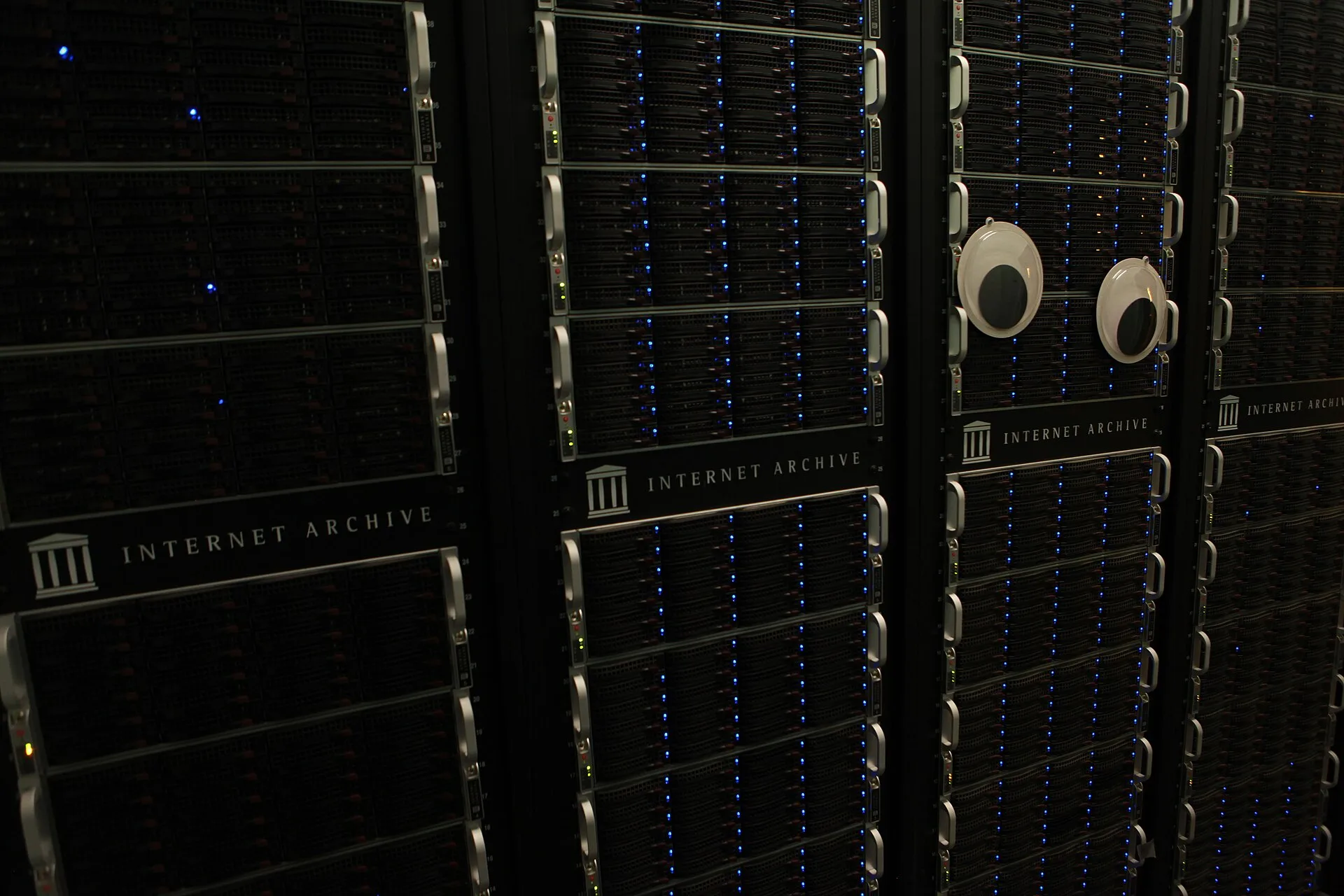
- Crawl archives.The Internet Archive's Wayback Machine is the largest and best known, and the first place most readers look. Common Crawl releases raw crawl data for researchers rather than a browsable replay. Archive-It is the Internet Archive's subscription service, used by universities, museums and the Library of Congress to capture selected sites. archive.today captures on demand and is often the only copy of a page taken down within hours.
- Community wikis and catalogs.Wikipedia and the Fandom wikis hold what people cared enough to write down. Volunteer projects such as Archive Team organize rescues when a platform announces that it is closing.
- Personal collections.One person's folder of saved images, screenshots, downloads and exported logs. Self-hosted tools such as ArchiveBox give those files an index and a capture date, though not always a reliable one.
- Institutional deposits.Material accessioned by libraries, museums and archives: the Library of Congress, national libraries, and arts organizations such as Rhizome, which collects net art that no crawler would run.
Two things sit underneath all four. Captures are usually stored in WARC, the standard archive file format, rather than as ordinary files, and Memento is the protocol that lets one request check several archives at once.
Webrecorder, the browser-based capture tool, records what a page does rather than only what it returns, which is why it can hold interactive material that a crawler sees as an empty frame. Perma.cc does the narrowest job of all: a permanent, citable address for a link in a document.
Four archive kinds and their gaps
Crawl archives
- Who made it
- Institutions, automated
- Keeps well
- Public static pages
- Gap
- Logins, scripts, obscure
Community wikis
- Who made it
- Enthusiasts documenting
- Keeps well
- Context and vocabulary
- Gap
- Accuracy, origin claims
Personal collections
- Who made it
- Individuals saving
- Keeps well
- Private and ephemeral
- Gap
- Coverage, provenance
Institutional deposits
- Who made it
- Libraries, museums
- Keeps well
- Stability, cataloging
- Gap
- Lag, formality
A crawl archive has a capture of a page but not the conversation around it. A community wiki has the conversation but asserts an origin it cannot support. A personal collection has the one file nobody else saved and no way to date it.
What survives, and why it is not random
The problem is usually described as technical, and it partly is: formats become unreadable, media degrades, software stops running. Archivists call that cluster of problems digital preservation. But the pattern of loss has a shape, and the shape biases everything built from the remains.
Survival by media type
- Textbest survival
- Imagesmoderate survival
- Interactiveworst survival
Text survives best. It is small, it is easy to copy, and it migrates between formats with almost no loss. A plain message from decades ago is as readable now as the day it was written.
Images survive moderately, with degradation. Each copy is re-encoded, cropped or captioned, and the version that survives is usually several generations from the original, with metadata stripped along the way.
Anything interactive or tied to a specific runtime survives worst. Script-built pages, plugins nobody runs, games, and animated formats are often captured as shells: the shell stays, the contents vanish.
The fear of a digital dark age, a period whose record successors cannot read, is a fear about this layer specifically.
Popular things were copied more, so they survived more. For this site's subject, that bias matters most: the surviving record over-represents what was already widely seen.
A history built from that record says the period was dominated by what happened to be saved. That proves nothing. The same circularity shapes any account of how a format spread, described under memes and virality.
And private things left nothing. The communities that were closed by design, which includes most small ones, produced conversation no crawler reached. A history of online community written from archives is a history of the public and the large.
Citing an archived item without overclaiming
An archived copy supports a narrow claim, and most citations stretch it. What a capture actually establishes:
- That content existed at that address on the capture date. Not earlier, not elsewhere, and not that the address was the original one.
- That the capture tool saw that content. A page can be served differently to a crawler than to a person, and a capture of a script-heavy page may show an empty frame that no human ever saw.
- That the captured version is what it is. It does not establish that the version was the first, the last or the widely seen one.
A citation that respects these limits names the address, the capture date, the archive, and the date the citation was checked. It says which of the four kinds of archive it came from. That exceeds most citations yet is the minimum that lets a later reader reproduce the check.
A formatted citation reads like this, with the bracketed fields filled in: Title of the page — address — captured [capture date] — [archive name], for example Wayback Machine — checked [date you looked]. Take the capture date from the archive's own record, not from the page's own text or from memory, and never present it as the date the page was written.
The reasons the check must be reproducible and the ways archived material fails when built into a chronology are set out under platform timelines.
Provenance in a personal collection
The most valuable material is often the fourth kind: the personal collection, the file somebody saved that no crawler captured. It also has the least provenance.
A saved image carries no record of where it was saved from. Its file date is when it was written to that disk, possibly a copy of a copy. Its metadata may be original, stripped, or rewritten by whatever service it passed through.
What can be done: record the collector's memory as recollection, and record what the file itself says as file metadata. Look for the same item in one of the other three kinds to anchor a date.
What cannot be done is treat the file as dated. The early social networks page describes why so much of that period's record exists only in this form, and why its dates are the least reliable.
The ethics of keeping what was meant to pass
Much of what archives hold was posted by people who expected it to vanish, in places they thought were small, under names they have since abandoned. Preserving it makes a decision on their behalf, and the decision is not obviously right.
The argument for preservation is that the record of a period belongs to everyone who comes after. The people who posted are part of the history, and the alternative is a period with no record at all.
The argument against is that a message to a room of thirty was not a publication. The person who wrote it did not consent to a permanent public copy, and an archive can turn a discarded persona into a permanent identity for someone who moved on.
The field has not resolved this, and this site does not pretend to. What it does is decline to reproduce material from small or closed spaces, describe patterns rather than people, and treat visible as different from published. An archive is a tool, and the people inside it were not consulted about being in it.
What a person can do about material they want removed depends on where they are and who holds the copy. In the United States, a copyright holder can send a takedown notice under the Digital Millennium Copyright Act, and the Internet Archive accepts exclusion requests from site owners who do not want their pages replayed. In the European Union, the General Data Protection Regulation gives individuals a right to erasure. A site can also place a robots.txt exclusion, which crawlers that honor it read as an instruction not to capture. None of these routes resolves the ethics; they only decide who has to answer the request.
Common questions
If a page is not in the crawl archives, did it exist?
Very possibly. Coverage is uneven, skewed toward the public and popular, and the absence of a capture is the normal condition for most of what was ever posted.
Which kind of archive is most reliable?
For dates, the crawl archives, within their coverage. For context, the community catalogs, with their origin claims discounted. For material nobody else has, personal collections, with no reliable dates. Institutional deposits for stability. None for everything.
Can an archived copy be wrong?
A capture may show a page as served to a crawler, not as a person saw it, or a shell with content missing. It may show a version that was live for an hour.
It is accurate about what it captured, and silent about what it did not.
Should I archive material from a small community I belong to?
Ask the community. The answer will tell you something about the community, and it is their record.
In this guide
- Five recognizable gaps in internet culture archives, and how to spot themFive archive gaps and what each looks like from outside: the login wall, the assembled page, missing media, an overwritten capture, a closed community.
- Internet culture archives platforms: migration vs. emulationInternet culture archives platforms face loss in four layers: bits, formats, rendering, and context. Compare migration and emulation, two distinct repairs.
- 5 parts of internet culture archives research, explainedFive working parts of internet culture archives research: provenance, rights layers, orphan works, exceptions, and the ethics of republishing ordinary people.
- Internet culture archives move constantly: writing a citation that survivesInternet culture archives move under your citation in five ways, only one of which looks broken, and this is how to write a reference that survives it.