
Maintenance
Part of How to build platform timelines that survive review
Where platform timelines trends are heading
Platform timelines trends are heading toward login-walled, app-only, unarchived records, and the forecast below names what changes and when.
Four named shifts decide where platform timelines trends are heading. Login walls at X, Reddit and Meta, ranked feeds at TikTok and Instagram, app-only services such as Threads and faster shutdowns from Vine in 2017 to Yahoo Groups in 2019 all change what a 2027 timeline can prove.
The default fate of a web page is to stop existing. Not deleted for a reason, but abandoned when hosting lapses or a format stops running.
Most of the early web is gone, and what survives is not a random sample. Anyone forecasting platform timelines is reading wreckage, so the forecast has to start with what the wreckage can still show.
What to take away
- Public post pages are closingX, Reddit and Meta now serve most thread content only to logged-in or app users, so crawlers capture the shell and miss the replies.
- Archive coverage is thinning exactly where the record matters most, which means a 2027 timeline will lean on screenshots and personal exports rather than captures.
- Treat every view count as a platform-defined event, not a person, and date the definition you cite.
- Write "no material located" and name the archives, languages and date ranges you searched.
- Keep your own copy of anything you cite, because a capture that resolves today can vanish after a takedown or a legal request.
Four platform timeline trends to watch
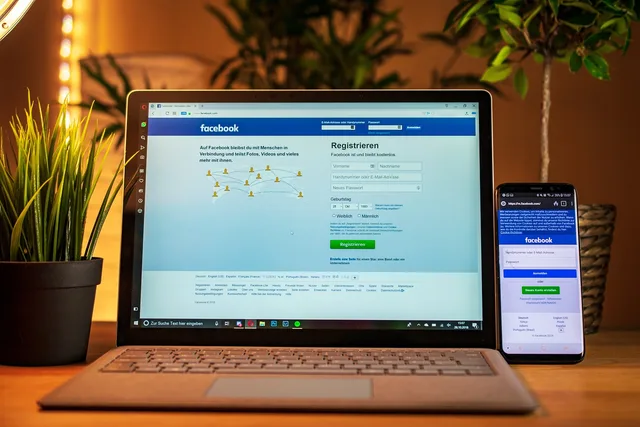
Login walls are becoming the default. Reddit restricted its public data interface in 2023, and Meta and X now push logged-out visitors toward an app install. X began requiring a login to read posts that year and capped logged-out browsing.
A crawler that is not signed in sees a stub. The replies, the argument and the moderation are the history, and they sit behind the wall.
Timelines are turning into ranked feeds. Chronological order was the archive's friend: a date-ordered page can be crawled month by month. A ranked feed serves a different order to every visitor, so two captures of the same day can disagree.
Instagram switched to an algorithmic feed in 2016, X made For You the default in 2023, and Facebook has ranked News Feed since 2009. The Wayback Machine can only record what it was served.
Short-form video is the weakest record. TikTok and Reels content loads on scroll, streams from a content delivery network, and often carries no stable public address.
The audio survives as a trend long after the post that started it is unreachable. Meme-origin traces get harder to date for the same reason. Snapchat is harder still: stories expire by design and the app has no public web view.
Platform shutdowns are getting faster. Vine closed in 2017 with a short export window and a partial archive. Tumblr's adult-content ban in 2018 removed posts that were never restored.
Yahoo Groups shut in 2019 and deleted its files on December 14, 2020. Google+ closed for consumers in April 2019. When a service winds down, the export tool arrives late and a small fraction of users ever run it.
What changes, and when
This forecast follows each platform's own public moves, and the timing is approximate.
Forecast: access changes by year
- 2026More logged-out views close
- 2027Record leans on screenshots, exports
- 2028Ranked feeds become the only view
- 2029 onwardShutdown notices get shorter
- 2026more logged-out views close. Threads launched on July 5, 2023 as an app-only service and added a web view in August 2023. Bluesky opened to the public on February 6, 2024 and still serves posts to logged-out readers. Treat that access as temporary.
- 2027the 2020s record leans on screenshots, exports and reporting. X's data archive returns your own posts and media as a file, not the threads around them. Reddit's export covers your own contributions, not the replies.
- 2028ranked feeds become the only view for more services. A capture then records one visitor's order, so two captures of a single day disagree more often. Instagram's 2016 switch and X's 2023 For You default show the pattern.
- 2029 onwardshutdown notices get shorter. Yahoo Groups gave users roughly a year before files went on December 14, 2020. Vine's export window ran for months. Plan for less.
What the forecast changes
A 2024 timeline could be built mostly from public captures. A 2027 timeline cannot. The record will be assembled from three weaker sources: screenshots people kept, exports a minority of users requested, and journalism that quoted the posts while they were live.
That shift has a measurable cost. Citation survival across a platform shutdown is close to zero for posts that lived only inside the service. Where you can, cite the archive snapshot and the date you saw the live page, not just the address.
Common Crawl publishes monthly crawls of the open web, and the Internet Archive's Wayback Machine takes captures on request. National programs such as the Library of Congress and the UK Web Archive crawl by permission or by domain. None of them can take what a login wall hides.
Measuring a timeline honestly
View counts are the trap. Each platform defines a view differently. X counts an impression when a post enters a timeline, TikTok counts a play when playback starts, and YouTube has counted a view after roughly 30 seconds, a threshold it changes from time to time.
None of them count people. If you cite a figure, date it and name the platform's published definition on that date.
Adoption curves are the second trap. A trend line that rises with total users can be measuring population growth rather than behavior change. Split the series by cohort and by period before you call a rise a shift in what people do. Follower counts carry the same flaw: they include dormant and duplicate accounts.
Worked example: dating a 2013 post
Say a screenshot shows a post with a visible like count but no timestamp. The steps that hold up:
Dating a 2013 post
- Find the post's permanent address in the screenshot, or search the archive for the thread title.
- Check the Wayback Machine for the earliest capture of that address and record the capture date.
- Look for a second, independent copya news article, a forum quote, or another user's export.
- Compare the like count against captures from the same month to bracket the date, and state the bracket rather than a single day.
If steps 1 to 3 fail, write "no material located" and describe what you searched. That is a finding, not a gap in your work.
Where the record is thinnest
The period between 2004 and 2012 is the hardest to reconstruct. Networks from that era ran on proprietary clients, stored media on hosts that no longer exist, and kept no public export.
Friendster closed its social network in 2011 and deleted accounts in 2015. MySpace confirmed in 2019 that a server migration had lost photos and audio uploaded before 2015. LiveJournal moved its servers to Russia in 2017.
What survives is largely what members copied by hand, which is why early social networks are documented mostly through personal collections.
For how archives are organized and what they hold, see internet culture archives. For the groups whose threads vanished with their host, see internet communities. For how to write a dated entry out of what remains, see platform timelines.
The mechanics behind the loss
Four failure modes explain most of the missing record. Hosting lapses when a domain is not renewed, and everything on it goes at once. Services close and take every thread, profile and upload with them. Runtimes die, so a file survives while nothing can open it. Image hosts vanish, leaving discussions where people react in detail to something invisible.
Aggregated across the web, the first of these is link rot, the ordinary condition rather than a malfunction. The third is the layer the digital dark age argument is about: a record that outlives the means of reading it.
Photobucket's 2017 change to third-party hosting broke embedded images across forums that had linked to it for years. Captures of those threads kept the discussion and, in many cases, not the picture.
What crawlers cannot take
Web archives capture a specific slice, and the slice is narrowing:
- Nothing behind a login, which is now most thread content on the largest platforms.
- Nothing that appears only after a search box is used.
- Nothing that loads as you scroll, since a crawler that does not scroll never requests it.
- Little large media, which is expensive to store.
- No private messages, group chats or closed rooms, by design.
- Nothing nobody requested, since most archiving depends on someone asking for a specific address.
- Nothing a rights holder or a court has asked to be removed, and nothing a robots.txt line excludes.
Add these up and the surviving record leans public, text-based, linked-to, and toward the languages with the most crawling attention. A forecast built on it inherits every one of those biases.
The Internet Archive runs the largest public web collection, funded by donations and user requests. Common Crawl and national libraries widen the text side. None of them opens a login wall.
Saving what you cite
What survives
- Bookmark the link
- Nothing, once the host goes
- Screenshot the post
- An image with no verifiable date
- Rely on one archive
- Whatever that archive kept
- Store one master copy
- Nothing, after one hardware failure
- Save the media only
- A file with no context
- Submit the URL to the Internet Archive's Save Page Now
- A capture tied to a public address, removable on request
- Submit the URL to archive.today
- A second copy behind a short link
- File the URL with Perma.cc
- A fixed citation link, run by the Harvard Law School Library
What to do instead
- Bookmark the link
- Save the page itself, not the address
- Screenshot the post
- Keep the original file and note the URL and date
- Rely on one archive
- Keep your own copy and request a capture
- Store one master copy
- Several copies in several places
- Save the media only
- Save the surrounding page, since context is the scarce part
- Submit the URL to the Internet Archive's Save Page Now
- Free, instant, and worth doing the day you cite the page
- Submit the URL to archive.today
- Useful when one archive is blocked in your region
- File the URL with Perma.cc
- Built for footnotes, and it records the filing date
Many small copies in many hands outlast one authoritative collection. Most of what survived from the early web survived that way, by accident.
Common questions
If it was popular, surely someone saved it?
Popularity helps and guarantees nothing. Plenty of widely seen material existed only inside a service that closed, and many people seeing it does not mean any of them kept a file.
Is a re-upload as good as the original?
For establishing that something existed, sometimes. For dating, no: a re-upload carries its own date, not the original's, and this is one of the most common ways a chronology gets years out.
How much of the early web is really lost?
Nobody can put a figure on it, because measuring the loss would require knowing what was there. Be suspicious of anyone who states a percentage.
Which change lands first?
The login walls are already here, and ranked feeds already dominate the big apps. The change still ahead is the dated one: public captures thin through 2027 as more services close logged-out access. X's 2023 login requirement and Reddit's 2023 API change set the pattern, and later closures have moved faster.
Will the 2027 record be better or worse?
Worse for public captures, better for personal ones. Login walls and ranked feeds reduce what archives can take, while phone storage and export tools mean more users hold copies. The forecast depends on which of those you count.